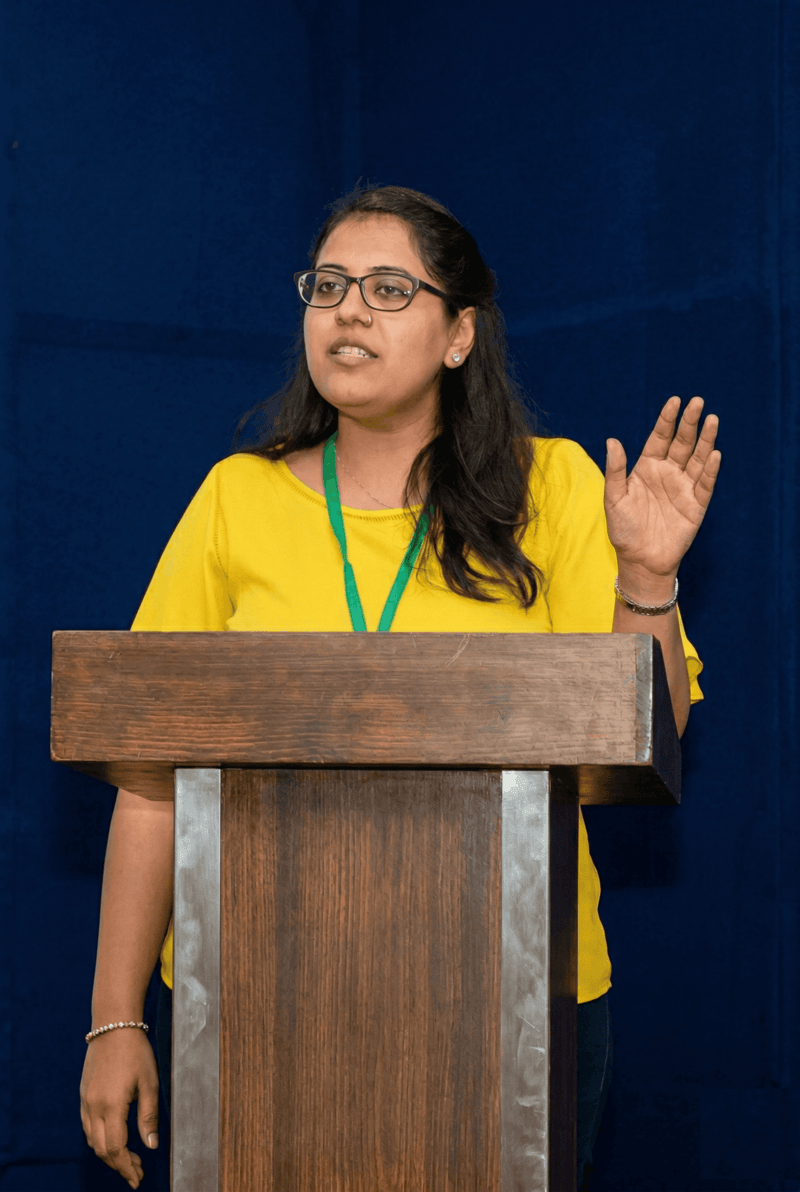
Palak Aggarwal
Founder & Managing Director
From Delhi to the Kalahari
The foundation of Battighar wasn't drafted in a Silicon Valley boardroom. Palak Aggarwal, armed with a Master's from TERI University, traded a privileged life in Delhi for the isolated extremes of the world. Her journey took her first to the dense Kalahandi forests of Odisha working with the Kandha tribe to establish the SELCO Tribal Community Lab, and later to the harsh Kalahari Desert in Botswana working alongside the San tribe.
Before launching Battighar, her technological foresight was already disrupting grassroots models. As a co-founder of Vendors of Change, she led the conversion of a South Delhi vegetable market running on stolen electricity into a fully solar-powered hub (featured on CNN). Following this, she spearheaded the Urjaa Samadhaan project—an Android app bridging off-grid technical failures with SMS gateways, creating local repair economies via mobile telemetry.
"If you just give someone a solar bulb, they have light. But if you give them a solar-powered edge node, they have an economy."
The Battighar Shift
It didn't take long to realize a critical flaw in traditional non-profit models: standard energy access wasn't stopping young people from migrating, nor was it pulling communities out of systemic poverty. People were losing days of income just trying to access basic services like printing a document or charging hardware.
Palak pivoted the entire organizational philosophy towards Productive Use Cases. Battighar officially became a high-tech incubator for grassroots micro-economies, designed to transition energy-efficient technologies straight from the lab into active rural livelihoods.
The Urja Gram Ecosystem
This paradigm shift led to the creation of the Urja Gram Kendra (solar-powered service centers), laying the absolute zero-layer for what would eventually evolve into the Battighar matrix today. By integrating IoT and machine learning into these nodes, Palak scaled local 'solar doctors' into highly-efficient, data-driven operators seamlessly tracking hardware performance via the cloud.
Today, Battighar stands at the exact intersection of relentless human empathy and cutting-edge artificial intelligence—ensuring that the bottom of the pyramid isn't just surviving, but systematically architecting the new climate-positive economy.